Friday, December 1, 2023

Teaching Grammar - Week 12 - Corrective Feedback in Grammar Instruction

  Teaching Grammar - Week 12 - Corrective Feedback in Grammar Instruction


Introduction: Hello and welcome to Week 12 of the course Teaching Grammar for the Bachelor's in English Teaching at ULACIT Term IIIC 2023. In this class we will do several activities to explore the topic of feedback in grammar teaching

Today's Goals:
  • Explore opinions and assumptions about corrective feedback in grammar teaching.
  • Practice using six oral correction techniques and share your opinions about them.
  • Review the important details of your upcoming assignments.
Guiding Questions:
  • What are some of the dilemmas related to corrective feedback?
  • What are different techniques for correcting students' grammar?
  • How can we prepare for the end of the course?


Warm Up: Identify the Errors
Go through the presentation and identify the language mistake, say what kind of error it is, and how you can correct it.


Task 1: Feedback in Grammar Instruction
This week you read a chapter about responding to learners' grammar errors. Let's explore this topic more deeply, but first let's start by analyzing attitudes toward the topic of error correction or corrective feedback. The following exercise comes from Penny Ur's (2012) book A Course in English Language Teaching.
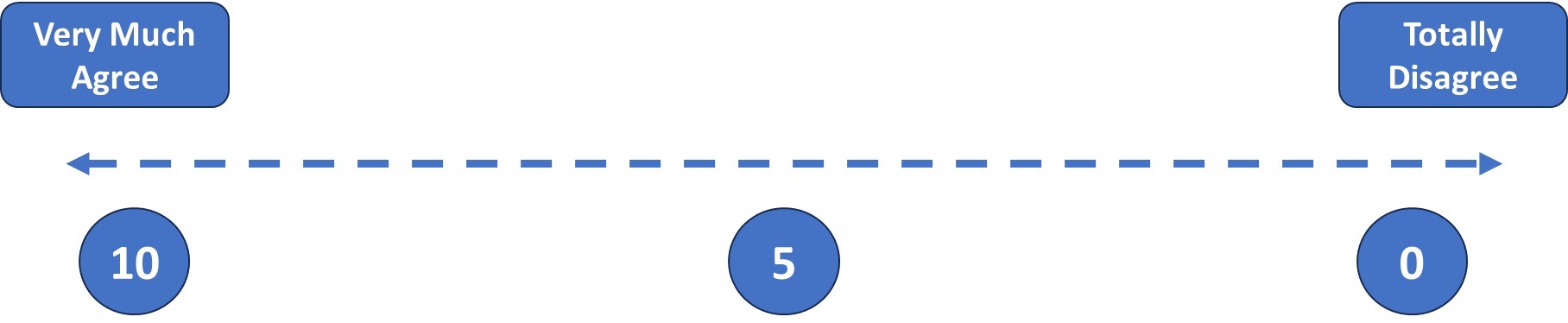

  1. The fact that the teacher assesses and corrects students' language implies a power hierarchy: the teacher above, the students below.
  2. Receiving corrective feedback from the teacher is potentially humiliating to the student.
  3. Teachers should try not to correct very much, in order not to demoralize students.
  4. It is also important to draw attention to when students get things right, not just when they get them wrong.
  5. Teachers should not let students correct each other's work, as this is harmful to their relationships.
  6. Oral corrective feedback should be given privately, not publicly.


  • Dilemmas in Error Correction: In your study guide you were asked to respond to the following questions. What did you say?
    • Given that language learners inevitably make lots of mistakes and you can’t possibly correct them all, how should teachers decide which errors to correct and how many to correct at a time?
    • Given that language learning is a highly emotional process and error correction points out what students are doing wrong, how can teacher balance the need to correct and the need to maintain a positive learning environment and protect the learners’ fragile language egos?
    • Given that learners need to develop both accuracy and fluency in speaking, how can teachers make decisions about the best time to correct an error (in the moment or delayed)?


  • Feedback Techniques in Oral Correction: Click the link below to explore some common feedback techniques.


  • Concluding Remarks: Let's review a few quotes from various authors to finish this topic.
    • "Student errors are evidence that progress is being made. Errors often show us that a student is experimenting with language, trying out ideas, taking risks, attempting to communicate, making progress. Analysing what errors have been made clarifies exactly which level the student has reached and helps set the syllabus for future language work" (Scrivener, 2005, p. 298).
    • “Failure to provide some negative feedback may have a damaging effect on the learner’s language development in the long run; on the other hand, providing only negative feedback may be ultimately demotivating.”
    • “Learners’ errors offer a rich source of material for language focus and consciousness raising” (Thornbury, 1999, p. 126).
    • "... are you going to correct effectively and risk disturbing the flow of communication, or are you going to refrain from correcting and risk the error being reinforced? The answer to this question is that it is up to your professional judgement, taking into account a number of factors, such as the level and confidence of the student, the goals of the course, the frequency or gravity of the error, the willingness of the students to tolerate interruption and so on. [This represents] one of the many 'on your feet' decisions that you gradually learn how to make as you gain experience" (Ur, 2012, p. 96).


Task 2: PPP / TTT Lesson Plan Outline
Let's take a look at your final creation for the course. 


Task 3: Upcoming Assignments
You have two important assignments coming up.


References:

Scrivener, J. (2005). Learning Teaching. Macmillan.

Thornbury, S. (1999). How to Teach Grammar. Pearson. 

Ur, P. (2012). A Course in English Language Teaching. Cambridge University Press.

English Phonetics and Phonology - Week 12: Introduction to Connected Speech

 English Phonetics and Phonology - Week 12: Introduction to Connected Speech


Introduction: Hello and welcome to the Week 12 of the course English Phonetics and Phonology for the Bachelor's in English Teaching at ULACIT term IIIC 2023. This week we will explore the phonological changes that occur to sounds in connected discourse.

Today's Goals: 
  • Review a new English phoneme that only exists in certain regional accents.
  • Explore four ways that we link sounds across words when speaking naturally.

Guiding Questions: 
  • How do we link sounds across words?
  • What are the two kinds of glides?
  • What is palatalization? 


Task 1: /lɛts lɝn ə nu ˈfoʊnim/
Your Regional English Accent Variety project is coming soon. Let's start our class today by reviewing a phoneme that only exists in certain regional dialects.


Task 2: /ɛksˈplɔrɪŋ kəˈnɛktəd spitʃ/
In today's lesson we will also review some important phonological processes that occur when we connect sounds across words in connected speech.


Reference: 

Celce-Murcia, M., Brinton, D., & Goodwin, J. (1996). Teaching Pronunciation: A Refernece for Teachers of English to Speakers of Other Languages. Cambridge University Press.

Friday, November 24, 2023

Culture and SLA - Week 11 - Social Contexts of SLA

 Culture and SLA - Week 11 - Social Contexts of SLA


Introduction: Hello and welcome to Week 11 of the course Culture and Second Language Acquisition for the master's in English teaching at ULACIT term IIIC0 2023. This week we will follow up on the topic of pragmatics that you saw in many of your reading group articles last week in order to look at the social contexts the shape the second language acquisition process.


Today's Goals:
  • Discuss the ways that sociocultural contexts can influence the process of SLA.

Guiding Questions
: 
  • How do social factors influence the second language acquisition process?
  • What areas of second language acquisition research intersect with sociocultural phenomena?
  • What cultural feature am I thinking about including in my lesson plan?


Task 2: Social Context of SLA
For homework you focused on the "Macrosocial Factors" that affect the out comes of the SLA process. Let's take a moment to focus more on each of these factors in a class discussion. Click the link below.


Theory Break: The Culture Learning Process


  • Culture Learning Models: They highlight the adjustment process as learners learn about and change to meet the requirements of the culture, while they are immersed in it. If they progress, learners pass through stages, phases, or passages, gradually accumulating knowledge about the culture, appropriate cultural behaviors, fluency in the language, and ultimately changing their attitudes toward the target culture, their own culture, themselves, and cultures in general (Moran, 2001, p. 123)."
  • Culture Teaching: "The key to teaching this unique experience is self-awareness, knowing one's self. At some point in this process, learners need conscious awareness of themselves. They need to recognize what they are going through and to purposefully take action. As teachers, we can help learners bring their experiences to the surface, to expression and articulation, so that they can decide how to respond to the culture. When learners do name their experiences - what they perceive, think, or feel - we need to be ready to help them situate this within a larger framework (Moran, 2001, p. 123)."
  • Moran's Framework: The process of culture learning consists of an ongoing series of encounters with cultural differences presented through structured participation in the language and culture curriculum (products, practices, perspectives, communities, persons). these differences can trigger emotional reactions. Guided by the teacher, the learners engage in description, interpretation, and response, consistent with the states of the experiential learning cycle and cultural knowings. Over time, through repeated encounters and explicit reference to models of culture learning, learners acquire more knowledge of the target culture, develop more appropriate linguistic and cultural behaviors, attain greater understanding, and enhance their awareness of their own culture, their intentions, and their competence as culture learners (Moran, 2001, p. 124)."


  • This model is based on the following assumptions:
  • Culture learning can be a conscious, purposeful process.
  • Culture learning requires managing emotions.
  • Culture learning depends on cultural comparisons.
  • Culture learning requires making the tacit explicit.
  • Learner characteristics affect culture learning.
  • The relationship between the learner's culture and the target culture affect culture learning.
  • The instructional context affects culture learning.
  • The teacher-student relationship affects culture learning.


Task 3: Prepare Your Culture Lesson Plan
Your homework for the week is to submit your culture lesson plan based on the Four Cultural Knowings and the Experiential Learning Cycle. A few weeks ago, you participated in a demo lesson on the topic of tipping in US culture that followed the same cyle. Take a moment to brainstorm some possible cultural topics you would like to explore in your lesson plan.

The final chapter in in Moran's book can be very helpful for thinking of possible activity types, question prompts, outcomes, and teacher roles in the four stages of the plan.


Click to see full size image.


Click to see full size image.

Chapter 12 in Moran's book also contains many helpful charts and reflection questions for each stage of the culture learning cycle. 
Feel free to also take a look at the lesson plan for the Demo class as inspiration.
Your other pending assignment is the group project to analyze a textbook. Do you have any questions about this?


References:

Moran, P. (2001). Teaching Culture: Perspectives in Practice. Heinle Cengage Learning.

Savile-Troike, M. (2012). Introducing Second Language Acquisition. (2nd Ed.) Cambridge University Press.

Design and Evaluation of Training Programs - Week 11 - Designing an Effective Workshop

 Design and Evaluation of Training Programs - Week 11 - Designing an Effective Workshop


Introduction: Hello and welcome to Week 11 of the course Design and Evaluation of Teacher Training Programs and Workshops for the Master's in English Teaching at ULACIT Term IIIC 2023. Today we will do several activities to explore the topics of narrative frames for class and teacher development, teacher talking time, and characteristics of effective teacher training workshops.

Today's Goals:
  • Participate in a narrative frame activity and propose ways this technique can be used with students and trainees.
  • Consider practical ways to research the topic ot teacher and student talking time.
  • Apply concepts from the reading to the design of your teacher training workshop.
Guiding Questions:
  • What are the possible uses of narrative frames to help promote reflection among students and trainees?
  • How can I measure my teacher talking time and my classroom action zone?
  • What are my principles for designing an effective teacher training workshop?


Warm Up: Writing my Thoughts
Click the link below and find your place in the document. Take the time you have to write brief but thoughtful responses to the prompts.


  • What similarities do you notice between the experiences of the students in this course?
  • What differences do you notice?
  • What are some possible applications of this kind of activity as a professional development strategy?
  • Remember that we learned that training can address a gap in knowledge or skill. However, attitudes and awareness are also important to address in teacher training and development. How might activities like these be used to measure trainee attitudes and promote reflection on their growing awareness regarding the topic of training?


Task 1: Sharing your PD Journal
Let's take a moment to share one of the entries you made in your PD Journal in Week 10. As you share your highlight, let's think about how this tip connects to how we as individual teachers can develop in our practice and how we as trainers can use these techniques to support teacher growth with teachers we work with.
  • Research Your Own Teaching
    • Use narrative frames to explore teaching
    • Use narrative writing
    • Monitor your teacher talking time (TTT)
    • Monitor your action zone
    • Use a case study to explore teaching and learning
Click to view full size image.


Task 2: Exploring Narrative Frames
In your reading this week from Richards (2017), the author suggests several tips for professional development that involve writing and narrative. Let's look deeper at the topic of writing from a teaching perspective and from a professional development standpoint.
  • Teaching Writing
  • In your experience, what is challenging about incorporating writing in an English course?
  • What do students tend to struggle with? What strategies have you used to help them?
  • In your opinion, how does the process of writing benefit a student's thinking and language development? How is the process (and benefits) of writing different than the process of speaking?
  • Writing as PD
  • From a teacher perspective, how often have you written about your teaching and for what purpose did you do the writing?
  • In what ways is writing about a teaching experience, belief, problem, or success story different than simply having a conversation about it?
  • What are the benefits of writing about personal teaching experiences for a teacher's professional development?

What are narrative frames?

Burkhuizen and Wette (2008) discuss the use of narrative frames as a tool to encourage teacher reflection and processing of experience as a part of a teacher education program or ongoing professional development initiative. They list the following strengths.
  • They reduce teachers' anxiety about writing reflectively and avoid concerns about whether or not they are doing it correctly. 
  • They provide flexibility in terms of what teachers write but are designed in a way to elicit specific kinds of thoughts and reflections. "Frames dictate the topics that they cover by channelling the responses (p. 381)."
  • They can be helpful data collection instruments for qualitative research.

One of the biggest benefits of using narrative frames with a group of teachers is that it ensures that each writing will be personalized and unique why still maintaining a similar structure and length. This makes it much easier to do activities in which teachers read each others' narratives, compare and contrast them, identify recurring themes and patterns, react to them and draw conclusions.
  • What are some training and ongoing professional development contexts in which this kind of writing might be useful?


Task 3: Researching Your Teaching
Richards (2017) also mentions two other areas that teachers can research in the classroom, their Teacher Talking Time (TTT) and their Action Zone. The need to reduce TTT is a common issue in many language teaching contexts but before it can be properly addressed, the concept of TTT needs to be clearly explored with teachers. Simply telling teachers to talk less, is not likely to have a big effect.
  • What functions (if any) does TTT have in the learning process?
  • Are there different kinds of teacher talk? If so, are some forms of teacher talk more beneficial than others?
  • If there are different forms of teacher talk, are there different forms of student talk? Is all Student Talking Time (STT) the same?
  • Are certain forms of STT more beneficial than others?
  • In your teaching context, what is the ideal ratio of TTT to STT? How could you measure this?


Richards says "We unconsciously tend to interact more with some students than with others, and the interaction pattern that we typically make use of is known as the teacher's action zone (2017, p. 87)." In face to face classes, your action zone has a physical component.
  • Where do you typically stand when interacting with students?
  • How often do you move from this spot? 
  • If you had to create a kind of "heat map" or track your foot path through the classroom, what would it look like?
Of course, the more important aspect of the action zone is which students are involved in the activities and speaking opportunities and to what degree they participate. An important project for professional development could be having teachers investigate their action zone, who is most clearly in the zone and who is out and then seek to define the factors (teacher, student, environmental, etc.) that lead to this configuration.
  • What strategies could you suggest to help teachers carry out this kind of research and reflective analysis?
  • What are some particular challenges related to the topic of the teacher action zone in an online teacing context?


Task 4: Avoid the Sun Ray Approach
In my experience, most teachers (myself included) are quite unaware of the actual amount of TTT and STT in their classes and their calculations are rough and based more on gut feelings than actual numbers. 
  • What strategies can teachers use to measure and monitor their TTT?
I've used two strategies with teachers I have trained. The first is to have them estimate the opportunities for STT by categorizing activities in their lesson plan as being high STT or low STT. Another strategy has been to have them review a recording of their lesson and complete THIS FORM. Once teachers become aware of their actual TTT/STT ratio, they can work to improve it. Richards provides a great list of reflection questions for teachers on page 86.


Task 5: Previewing your Workshop Template
For the development stage of your class project you will create the activities and materials needed for a section of one of your modules. Let's review the instructions for this assignment and check out the course template in Canvas that you will be using. 


Task 6: What Makes an Workshop Effective?
In your reading response for this week your read a a chapter in Nation & Macalister (2010) about the design of in-service workshops. Let's review some key content from the study guide and see how they can be applied in our training workshop:


References:

Burkhuizen, G & Wette, R. (2008). Narrative frames for exploring the experiences of language teachers. System36(), 327-387.

Nation, I.S.P., & Macalister, J. (2010) Language Curriculum Design. Routledge.

Richards, J. (2017). Jack C Richard's 50 Tips for Teacher Development. Cambridge University Press.


English Phonetics and Phonology - Week 11: Consonant Clusters

 English Phonetics and Phonology - Week 11: Consonant Clusters


Introduction: Hello and welcome to the Week 11 of the course English Phonetics and Pholology for the Bachelor's in English Teaching at ULACIT term IIIC 2023. This week we will explore the tricky pronunciation concept of consonant clusters.

Today's Goals: 
  • Review vowel and syllable reduction in fluent and informal speech.
  • Identify and classify common syllable initial and syllable final consonant clusters.

Guiding Questions: 
  • How does syllable stress affect the pronunciation of other parts of a word?
  • What are consonant clusters?
  • Which consonant clusters are hardest for Spanish native speakers to pronounce?


Task 1: /ridiŋ fʌni poʊəmz/
Let's start with a little warm up. You will read two humorous poems written in IPA and interpret them into standard English. Click your group link below.


Task 2: /tʃɛk ðə θiəri/
Let's learn about consonant clusters.


Task 3: /ɛkˈsplɔrɪŋ ˈkɑnsənənt ˈklʌstɚz/
Click your group link and complete the virtual worksheet with your partners.

Teaching Grammar - Week 11 - Planning a Grammar Lesson

  Teaching Grammar - Week 11 - Planning a Grammar Lesson


Introduction: Hello and welcome to Week 11 of the course Teaching Grammar for the Bachelor's in English Teaching at ULACIT Term IIIC 2023. In this class we will do several activities to explore the topic of lesson planning for grammar classes.

Today's Goals:
  • Recognize the stages, purpose, strengths and limitations of the PPP lesson planning sequence.
  • Consider an alternative to PPP that takes a communication first approach to lesson planning.
Guiding Questions:
  • How did PPP come to be the dominant planning framework in ELT and what are the conflicting views about it?
  • How can a deep end approach to grammar lesson design be carried out in a practical way?


Warm Up: The Columbian Exchange
Yesterday, people in the United States celebrated Thanksgiving which marks an important historical event in North America when a group of English colonists began a new life in the area now known as New England. The most important tradition during Thanksgiving is the meal which consists of a mixture of New World and Old World products. The Columbian Exchange refers to the historical processes beginning in 1492 in which Spanish expeditions made the first contact between the Old World and New World and began the process of mixing animal, plant, and disease species between two parts of the globe that were previously isolated. 


Activity 1: Old World or New World Origin?
Your teacher assigned you to a group. Click on the link below and then go to your assigned section of the document.

Activity 2: Paragraph Writing
Now work with your partners to write a paragraph by completing the missing information below.

"The Columbian Exchange is an event that changed the world. It represents the exchange of plants, animals, and diseases between the New and Old Worlds starting on October 12, 1492. Before the arrival of Europeans, in the Americas people ate many ______s, ________s, and also some _______ but they did not eat any ______ or ______. Europeans did not have access to _______s or _______s but they did have many ______s and a little ______.  Over the centuries, these plants and animals have traveled around the globe. Now people everywhere can enjoy as much ______ and ______ as they want and they can easily buy a few ______s and _______s at their local supermarket. 


Activity 3: Pair Discussion
Talk to your partners about the things you eat and drink using the sentence starters below.
  • I typically eat lots of ______ because...
  • I don't drink much ______ because...
  • My typical meal does not include any _____ but it does include a many ______...
  • I think I eat to much ____ because...
  • I think I eat too little ______ because...
  • I should probably eat more ______ because...
  • For a light snack I eat a few ______ and ...
Continue your conversation with your partners. How many of these words can you include?
  • some
  • any
  • much
  • many
  • a few
  • a little

Activity 4: Critical Thinking
Discuss these questions with a partner.
  • What proportion of your diet consists of New World items and Old World items?
  • Think about three typical Costa Rican dishes. What are their ingredients? How many of them are Old World items? How many are from the New World?
  • The Columbian exchange also brought many negative consequences. What were some of them?
  • The world of 2023 is now completely connected. What are some possitive and negative effects of our globalized society?


Task 1: Planning a Grammar Lesson
Discuss the following questions with your partner.
  • What does a good grammar lesson look like?
  • What elements should a lesson plan contain?
  • How should a grammar lesson flow? 
  • What stages should it contain and what are their functions?
  • What is PPP and have you ever used it as a teacher or experienced it as a learner?
  • Can you think of any alternatives to this way of sequencing a lesson?


Task 2: Grammar Lesson Walkthrough
Now let's walk through a sample grammar lesson aimed at teaching comparisons and superlatives. Afterward, discuss these analysis questions:
  • How was the lesson organized?
  • When in the lesson was the grammar introduced and how?
  • If the grammar topic of the lesson was comparisons and superlatives, what was the general theme of the lesson? What role did the theme play in the design of the lesson?
  • When did students have a chance to use language communicatively?
  • Does this lesson sequence fit your previous understanding of PPP?

Introduction: Hello, and welcome to Week 5 of English II. In today's class we will talk about places to visit on vacation and the following language:
  • Descriptive Adjectives
  • Comparisons
  • Superlatives
Class Objectives: By the end of this lesson you will
  • Discuss fun activities to do on vacation.
  • Compare vacation activities, destinations, and hotels.
  • Propose the design of a luxury hotel.
Guiding Question: What makes a great hotel?


Warm Up: Best Places to Visit in Costa Rica
Imagine you are planning a vacation and you are considering possible locations to visit and activities to do. Order them according to how much you like them.
  • Manuel Antonio Nacional Park
  • New York City
  • Isla del Coco
  • Downtown Puntarenas
  • Mexico City
  • Beaches in Guanacaste
  • All inclusive resort in the Bahamas
  • Cabin in the mountains in Monteverde


Activity 1: Discuss with your Partners (groups of 3 or 4)
Discuss the following questions with your partners.
  • What are some popular vacation places in Costa Rica? 
    • Which do you know?
    • When did you go?
    • Do you like it? Why? Why not?
    • Which new places in Costa Rica would you like to visit in the future?

  • When do people in Costa Rica have vacation?
    • What are popular times of the year to travel?
    • What is your favorite vacation time of the year?
    • What are some nice activities that you can do on a long weekend?

  • Look at the options below. What do you prefer on vacation?
    • Eat in a restaurant or take your own food?
    • Do many activities or just relax?
    • Swim in the pool or swim in the ocean?
    • Rustic accomodations in the country or modern accomodations in the city?
    • Travel with pets or leave the pets at home?
    • Travel with friends/family or travel alone?


Activity 2: Grammar Analysis (whole group)
Students participate in an interactive presentation led by the teacher. 


Activity 3: Controlled Practice (pairs)


Activity 4: Freer Practice (pairs)


Activity 5: Production Activity (groups of 3 or 4)


Activity 6: Wrap Up (whole group)
Let's go back to your list from the first activity. Imagine you can go to two of these places during Christmas vacation. Which two places do you prefer? Why do you prefer to go to these places and not the others?
  • Manuel Antonio Nacional Park
  • New York City
  • Isla del Coco
  • Downtown Puntarenas
  • Mexico City
  • Beaches in Guanacaste
  • All inclusive resort in the Bahamas
  • Cabin in the mountains in Monteverde


Task 3: Exploring Lesson Planning Options
Let's learn more about the famous PPP lesson sequence and explore an alternative. 


References:

Thornbury, S. (1999). How to Teach Grammar. Pearson. 

Saturday, November 18, 2023

Culture and SLA - Week 10 - Reading Group Workshop

    Culture and SLA - Week 10 - Reading Group Workshop


Introduction: Hello and welcome to Week 10 of the course Culture and Second Language Acquisition for the master's in English teaching at ULACIT term IIC0 2023. This week we will participate in the reading group workshop to explore some practical strategies for teaching culture in the language classroom by sythesizing and analyzing the ideas found in your assigned readings.


Today's Goals:
  • Present a brief workshop on an assigned reading that synthesizes the author's ideas and explores their classroom implications.
Guiding Questions: 
  • What is the role of materials in culture learning in the L2 classroom?
  • How can I promote professional discussion among peers about an academic article from my field?


Task 1: Reading Group Workshop
Now it's time for your reading group workshop. Before we participate in your presentations, let's quickly review the learning objective and justification.
  • Learning Objective: Demonstrate your ability to read an academic article and accurately identify and synthesize key concepts presented in the text in order to lead a group discussion exploring the implications of the theory to your teaching practice.
  • Justification: A key skill of a professional educator is the ability to draw upon relevant theory from academic literature from the field in order to inform his or her teaching practice. Although academic texts can be challenging, it is essential to develop the ability to read, interpret, and synthesize the core ideas of academic articles when pursuing a degree in a graduate level program.
  • Topic 1: "Cultural Mirrors: Materials and Methods in the EFL classroom" (Cortazzi & Jin, 1999)
  • Topic 2: "Materials for Cultural Awareness" (Pulverness & Tomlinson, 2013)


Task 2: Instructions for Pending Assignments
You have two more major assignments in this course, the Culture Lesson Plan and Textbook Analysis Paper and Presentation. Let's take a look at the instructions for each of them now.


References:

Cortazzi, M. & Jin, L. (1999). Cultural Mirrors: Materials and methods in the EFL classroom. In E. Hinkel (Ed.), Culture in Second Language Teaching and Learning (pp. 196- 219). Cambridge University Press.

Pulverness, A. & Tomlinson, B. (2013). Materials for Cultural Awareness. In B. Tomlinson (Ed.), Developing Materials for Language Teaching (2nd ed., pp. 443-459). Bloomsbury Academic.